
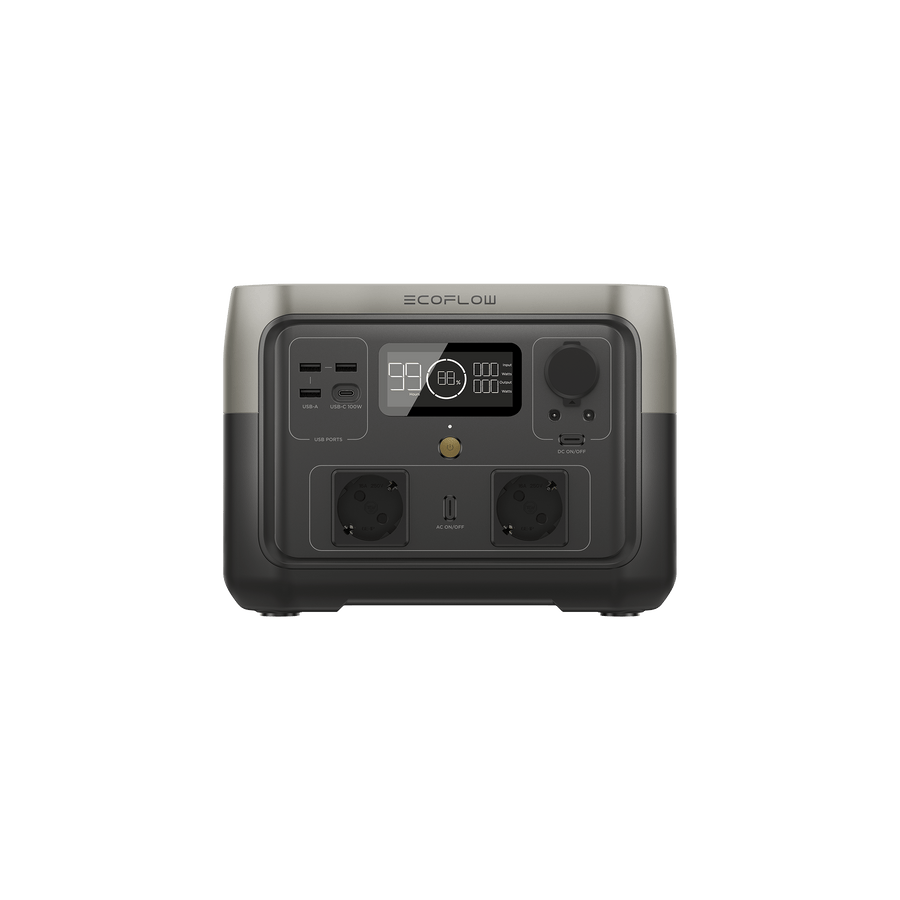
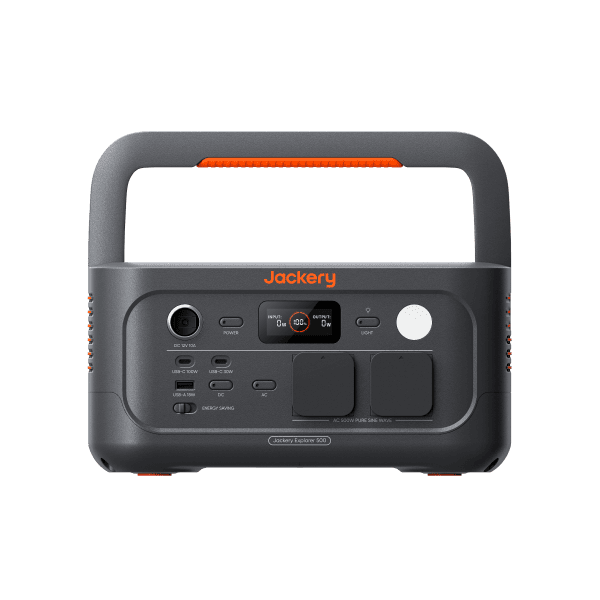
Choose the Jackery Explorer 500 v2 if carrying weight decides the purchase. At 5.7 kg it is 0.3 kg lighter than the RIVER 2 Max. Both offer 512 Wh and 500 W; there is no capacity advantage to pay for.
| Figure | EcoFlow RIVER 2 Max | Jackery Explorer 500 v2 |
|---|---|---|
| Battery capacity | 512 WhSource · 10 September 2026 | 512 WhSource · 10 September 2026 |
| Advertised AC output | 500 WSource · 10 September 2026 | 500 WSource · 10 September 2026 |
| Weight | 6 kgSource · 26 September 2026 | 5.7 kgSource · 21 September 2026 |
When would we choose the EcoFlow?
Both stations can supply up to 100 W over USB-C. Jackery adds a second 30 W USB-C output, while EcoFlow’s 100 W port also accepts power to recharge the station. Choose the EcoFlow if USB-C recharging is useful; choose the Jackery for the lighter 5.7 kg carry. Jackery’s support table explicitly lists no USB-C input.
How much time does 512 Wh buy?
At a steady 100 W, our planner’s default assumptions give about 3.7 hours for either battery rating: 512 Wh × 80% delivered energy × 90% after reserve ÷ 100 W. This is a planning estimate, not a runtime test.
The limit both share
A typical high-power UK kettle is outside their 500 W running rating. For that job, choose a higher-output station; for more hours with small electronics, choose a larger battery.
Our pick for frequent carrying is the Jackery. Before paying a premium for its 0.3 kg saving, compare the current station-only prices and the ports you actually need.