
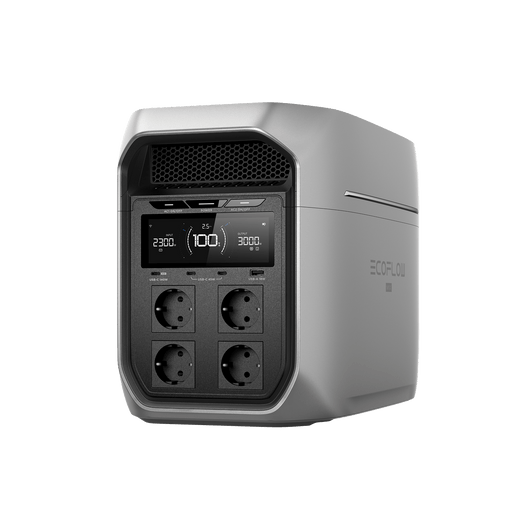
The DELTA 3 Max is lighter. The Max Plus adds higher output, more solar input and battery expansion. Both start with 2,048 Wh, so the Plus name does not mean more energy in the base unit.
Capacity, output and carrying weight
| Specification | DELTA 3 Max | DELTA 3 Max Plus |
|---|---|---|
| Nominal capacity | 2,048 Wh | 2,048 Wh |
| Advertised AC output | 2,400 W | 3,000 W |
| Approximate weight | 20.3 kg | 22.1 kg |
| Maximum solar input | 500 W | 1,000 W |
| Extra-battery connection | Not listed | Compatible packs supported |
Choose output around the equipment
A steady 2,700 W load exceeds the Max’s advertised rating but falls within the Max Plus rating. That comparison covers running demand: starting demand and the exact regional electrical configuration still matter.
The Max Plus is approximately 1.8 kg heavier. If your combined loads already fit the Max and you can recharge between sessions, decide whether the extra capabilities justify carrying that weight.
More input can change the recharge plan
The Plus has a higher solar-input ceiling. It needs a compatible panel setup and suitable conditions to benefit; a larger input rating does not promise twice the charging speed. Check voltage, current and connectors with our solar compatibility guide.
Expansion changes the system you carry
Extra batteries add storage, cost, weight and connection hardware. EcoFlow’s maximum expansion arrangements also refer to an adapter marked as forthcoming on the UK page. Confirm the complete supported arrangement and accessory availability before planning around it.
Compare the Max and Max Plus model records, then use the planner for your load and time between charges. Keep surge and X-Boost figures separate from the running-output comparison.