
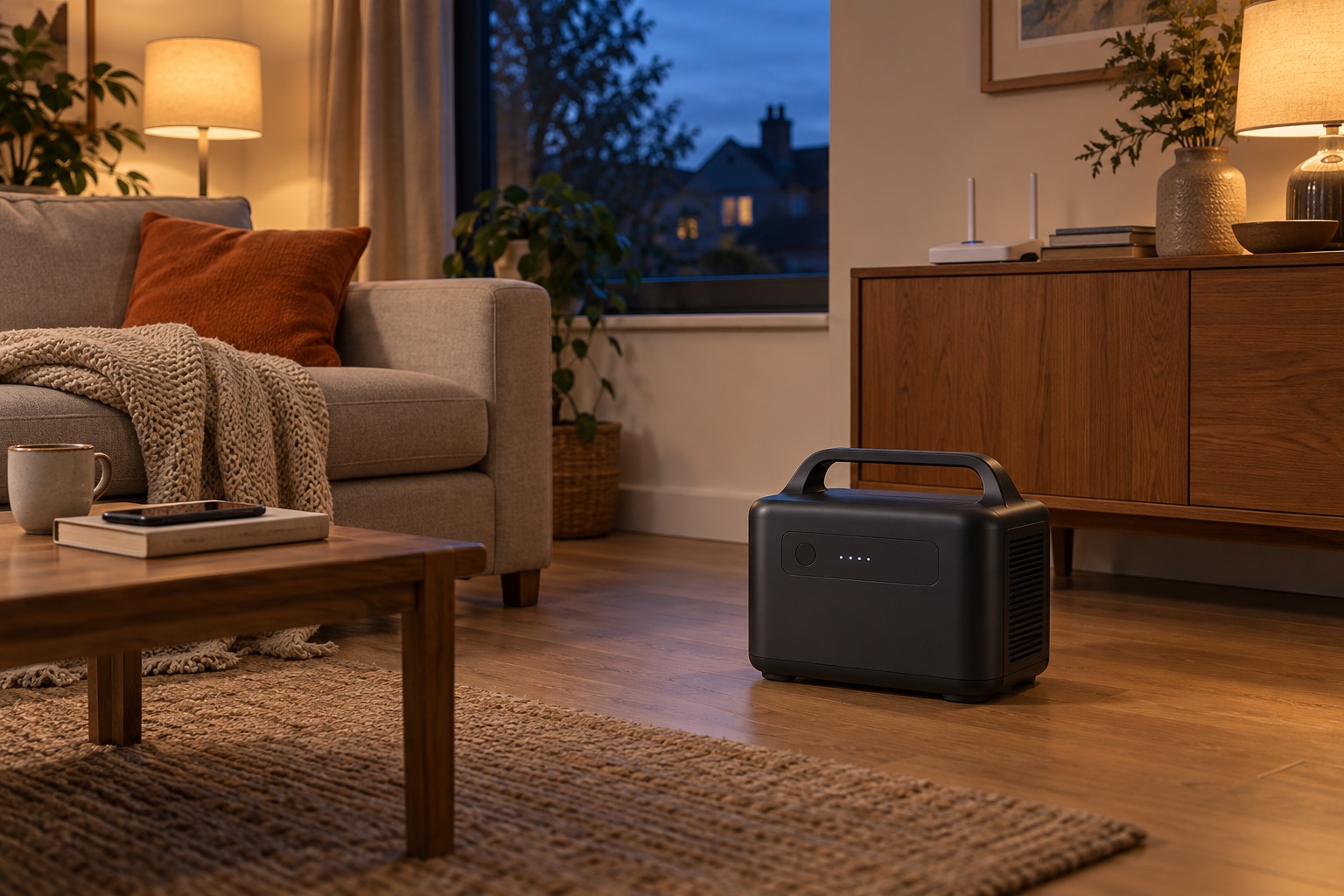
Start with the things you would need during an evening without electricity: a light you can find, a charged phone, drinking water and food you can use without cooking. Buying a large battery is a later decision, once you know which electrical jobs you need it to do.
The UK government's Prepare campaign asks households to consider emergencies lasting a few days. Its suggested kit includes a torch, radio, portable phone power bank, water and non-perishable food, with extra provision for individual needs such as babies and pets. It recommends supplies appropriate to the household. This is preparedness guidance, not an announcement of food rationing or evidence that a particular attack or outage is imminent. Government household preparation guidance.
Make a plan that works in the dark
Keep essential items in a known place and make sure everyone in the household knows where that is. A torch buried with camping gear is less useful when the lights go out. Write important numbers down: a phone can run out of charge at precisely the wrong time.
The Prepare site lists 105 for power cuts in England, Scotland and Wales, and 03457 643643 in Northern Ireland. It directs eligible households towards utility support registers. Follow the guidance of your local network and emergency services for your location. Prepare: contacts and additional support.
Choose foods your household can actually eat without an electric cooker, and account for water and other personal needs. Rotate supplies as part of ordinary use. A power station cannot replace those basics or restore a water service.
Decide which devices are essential
Make a short list rather than trying to reproduce normal household electricity use. Phone charging and a small light are one level of requirement. A fridge, work equipment or other AC appliances need more detailed planning.
For an arithmetic example, an assumed constant 10 W device used for eight hours would need 80 Wh delivered to it. Two such devices would need 160 Wh. The battery's nominal capacity must also accommodate conversion losses and its own consumption; we do not claim a particular runtime for any model from this calculation.
A router is only useful if the internet service beyond it is operating. Mobile networks can also be affected during disruption. A charged device helps you retain options; it does not guarantee connectivity.
Keep medical backup separate from shopping advice
If someone relies on powered medical equipment, arrange a plan with the equipment provider and relevant care team. Do not rely on a generic runtime table or a marketing “UPS” label. Compatibility, switchover behaviour and the response if power runs out need equipment-specific advice.
UK Power Networks describes additional support for eligible customers who rely on electricity for medical reasons. Availability and arrangements are specific to the network and customer; this is not a nationwide promise of an immediate battery delivery. UK Power Networks support information.
Where a portable station fits
A station can supply compatible appliances within its documented limits. Check continuous output, stored energy, the exact UK configuration, charging method and where it can be used safely. Plug compatible appliances into its intended outlets. Do not use improvised cables to feed electricity into household wiring; installed backup arrangements require appropriate professional design.
Follow the station manual for storage, charging and periodic checks. The practical question is whether the unit will be ready when needed and whether you can recharge it during a longer interruption.
If the requirement is only phone charging, start by considering a power bank. If you need AC equipment, compare the relevant stations and investigate the gaps in their records. Preparation becomes more useful when each purchase has a specific job.